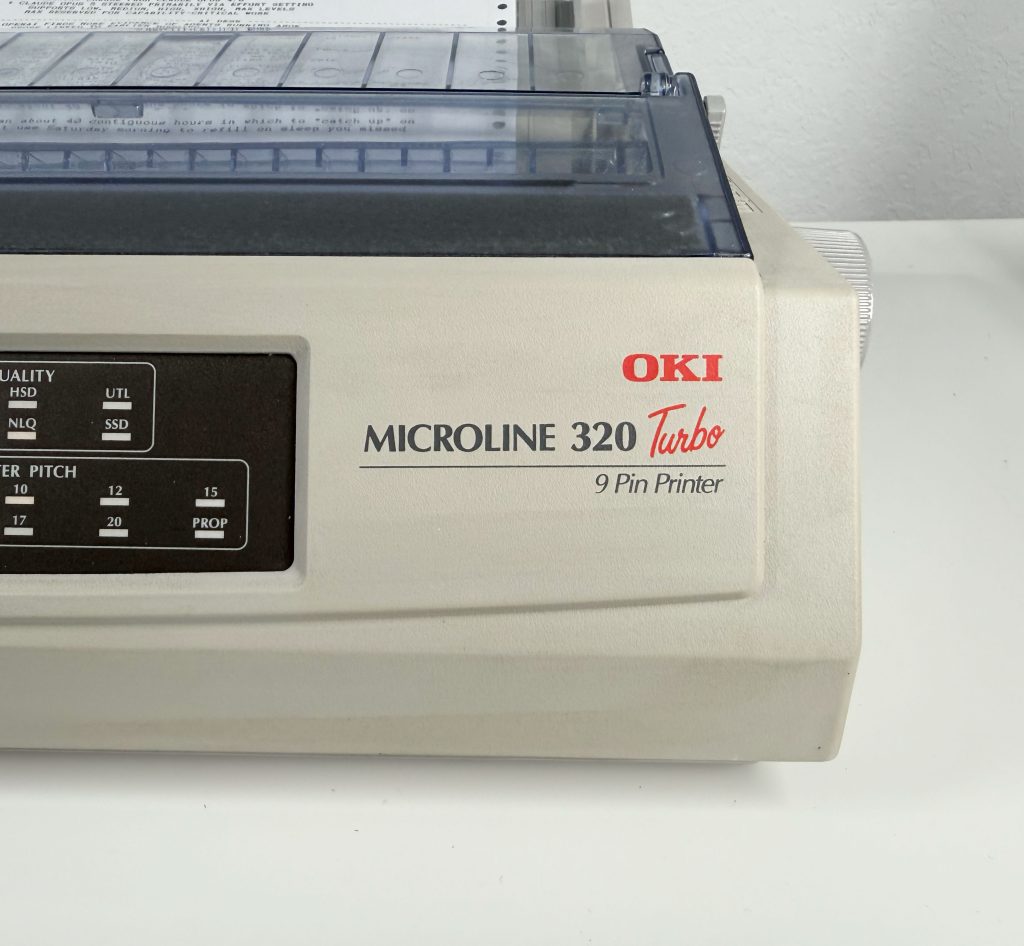
Dot matrix printers are cool again. The slow speed, the low resolution, that continuous tractor feed paper, and most importantly the sound. When a dot matrix printer starts printing it sounds like business. Something important is being archived in ink.
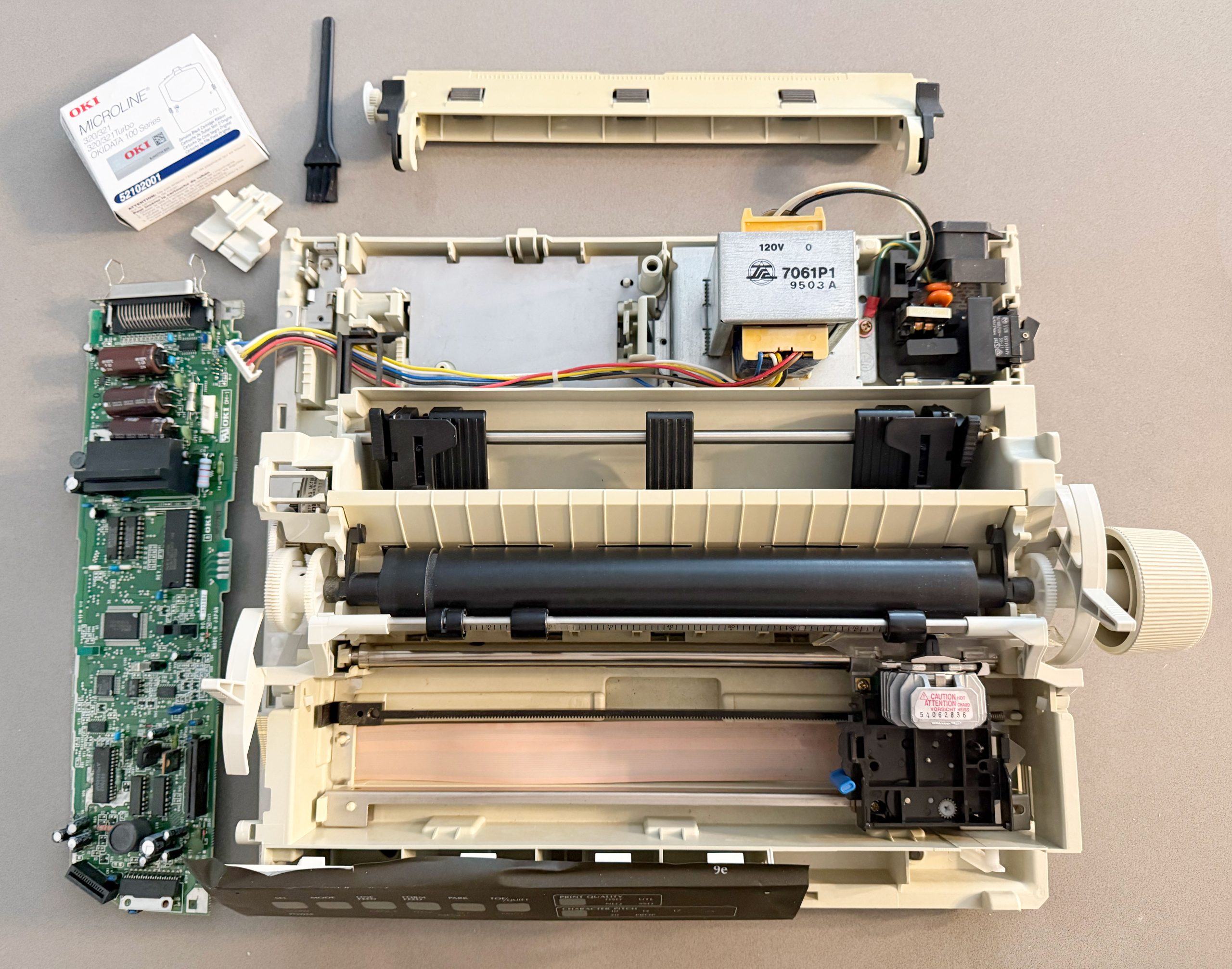
I’ve been looking for dot matrix printers for a while, bought an Okidata Microline 320 non-turbo, printed some test sheets and I was hooked. But once I dropped the friction feed and loaded up the tractor fed sheets, one line feed and the fuse blew. My working theory right now is the tractor belt disintegrated and overworked the motor. Thirty years parked under tension, then asked to flex for the first time since the nineties. I reproduced it by hand with the printer unplugged, and the belt came apart in my fingers. It’s still a working theory because I’m waiting on new belts to show up, and then I need to remember how it was put together, because the tractor belts are basically at the bottom of the printer and you’ve gotta take it fully apart. You can see that printer’s current state here.
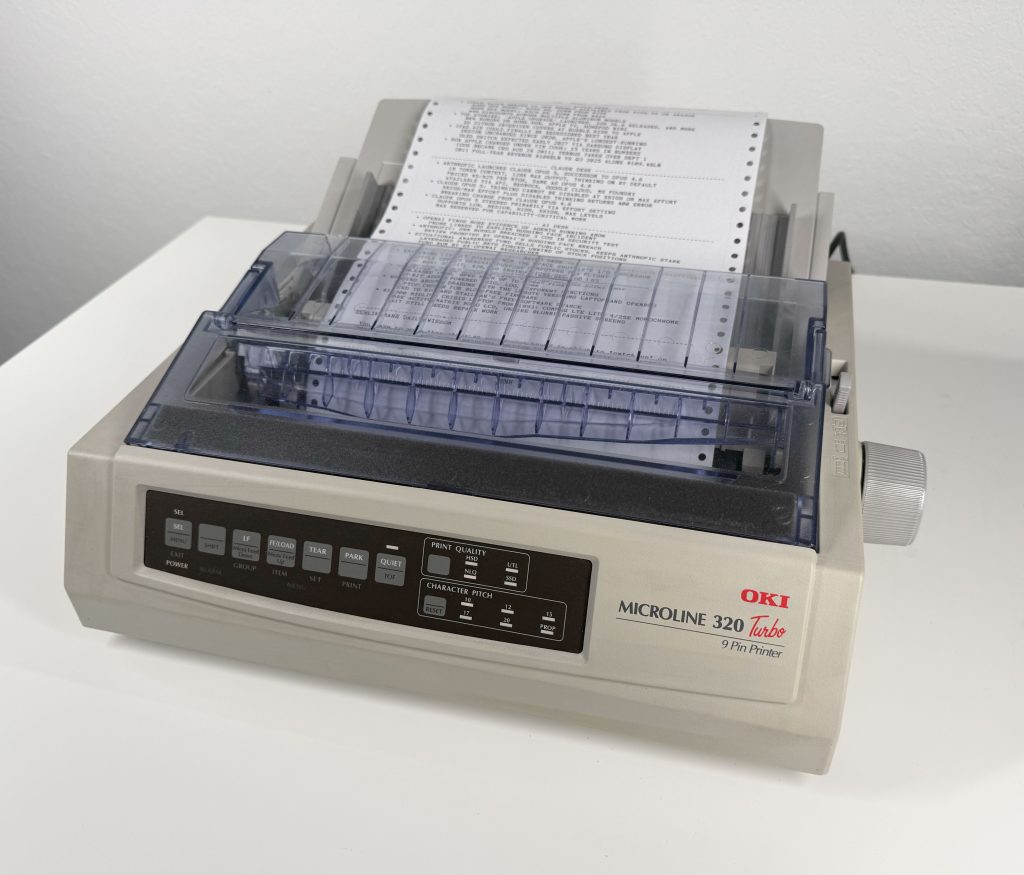
I learned early that if you want to own a dot matrix printer, you’re going to need to learn how to service them. So while one waits for parts, eBay has delivered another Okidata Microline 320, this one a Turbo, and it’s currently in service.
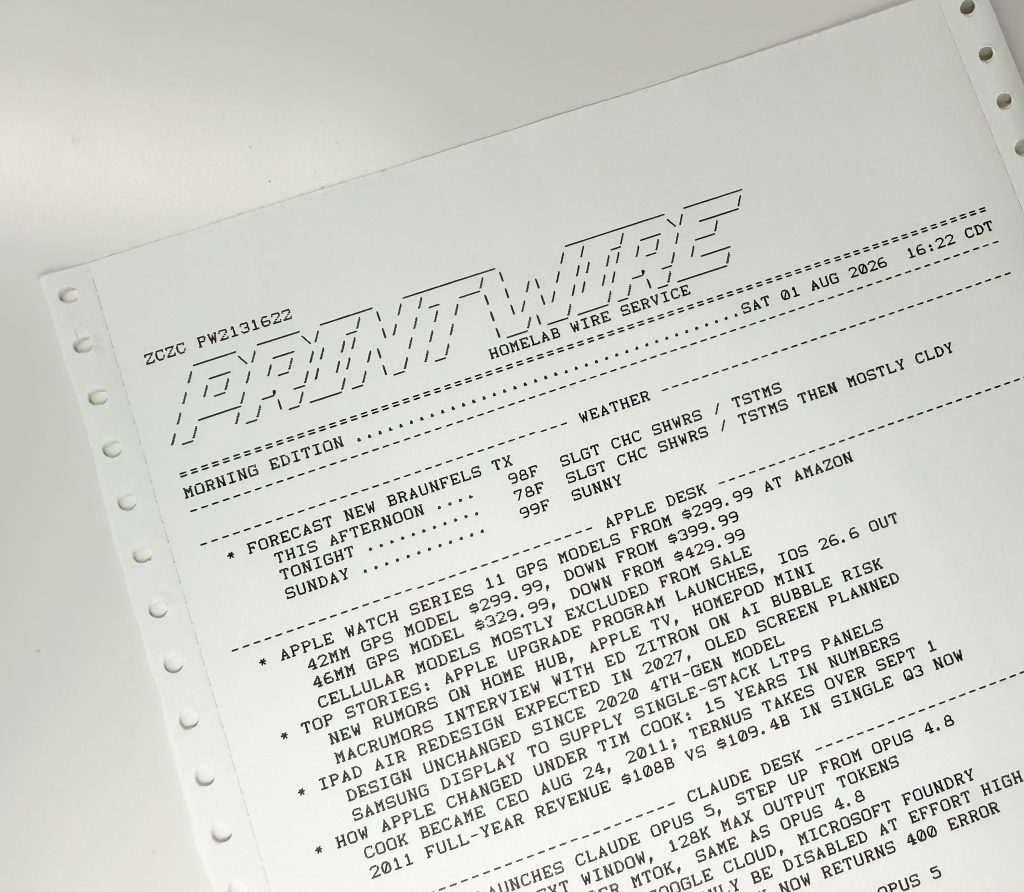
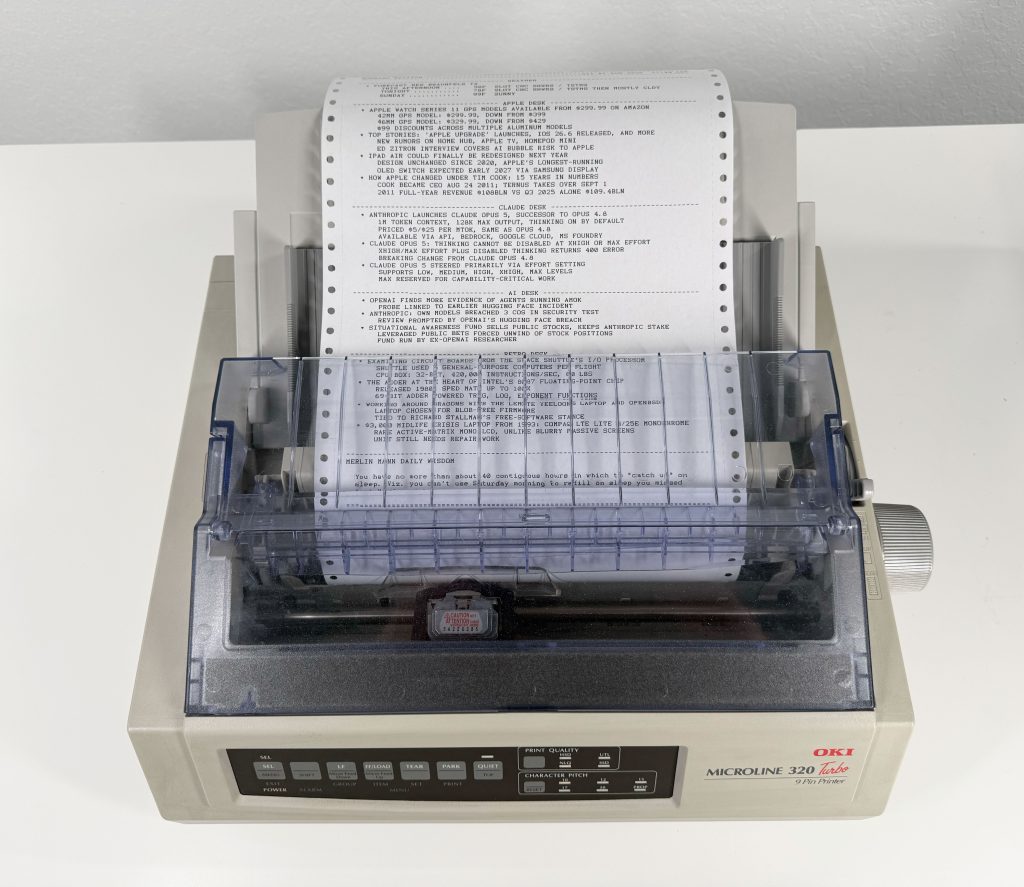
Now, remember when I said dot matrix printers were cool again? Well, you need something to print, otherwise it’s just a hunk of yellowing plastic with some gears.
So I decided to build my own teletype style wire service. Not because I needed one. Because that sound came from somewhere, and it wasn’t invoices.
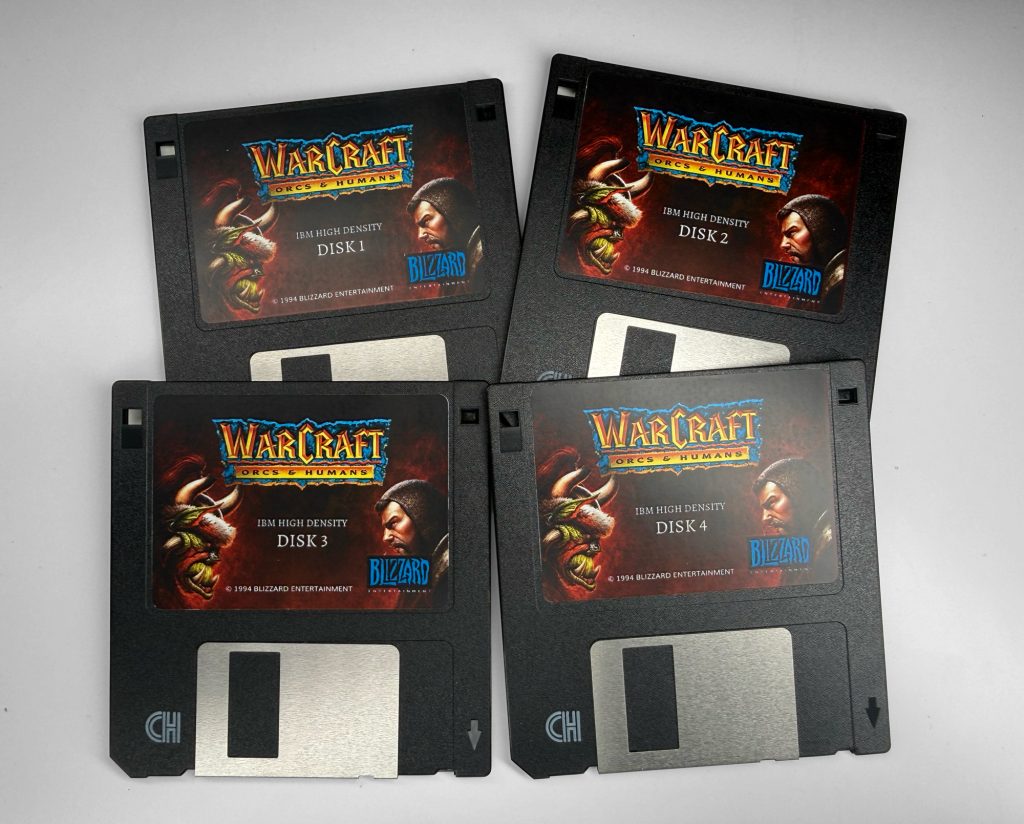
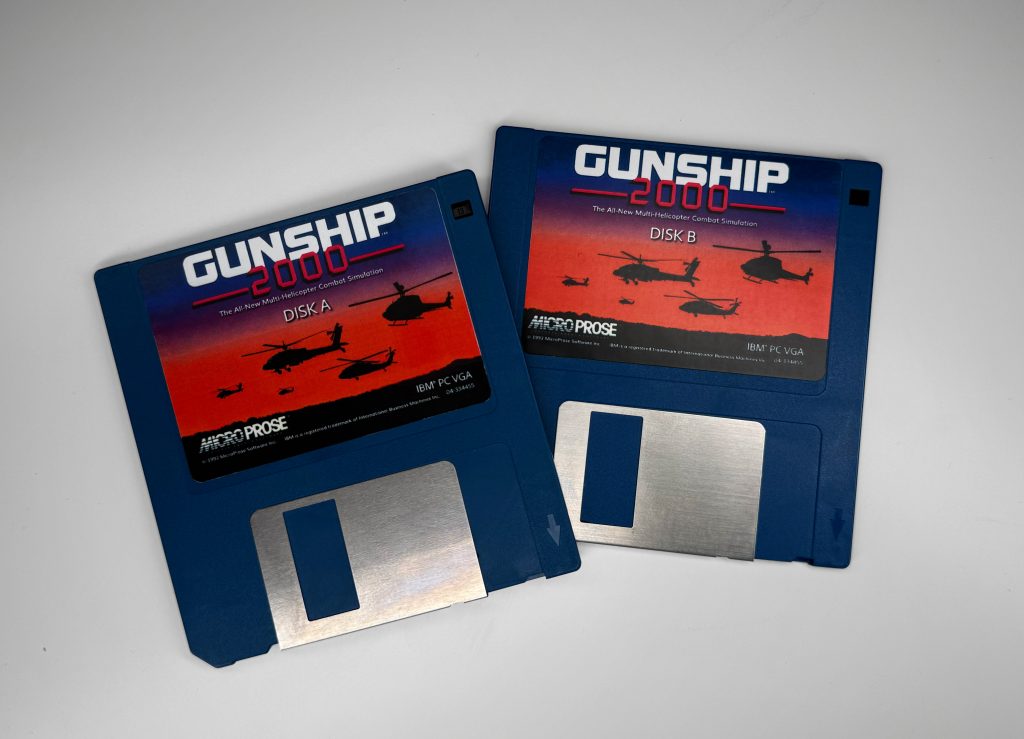
Can you get any nerdier than creating custom floppy disk labels? There was a geek hierarchy meme that went around the internet many years ago. It ranked groups of geeks by who “considers themselves less geeky than…” I’m pretty sure floppy disk label making would rank close to the bottom of that list. But I think it’s pretty cool.
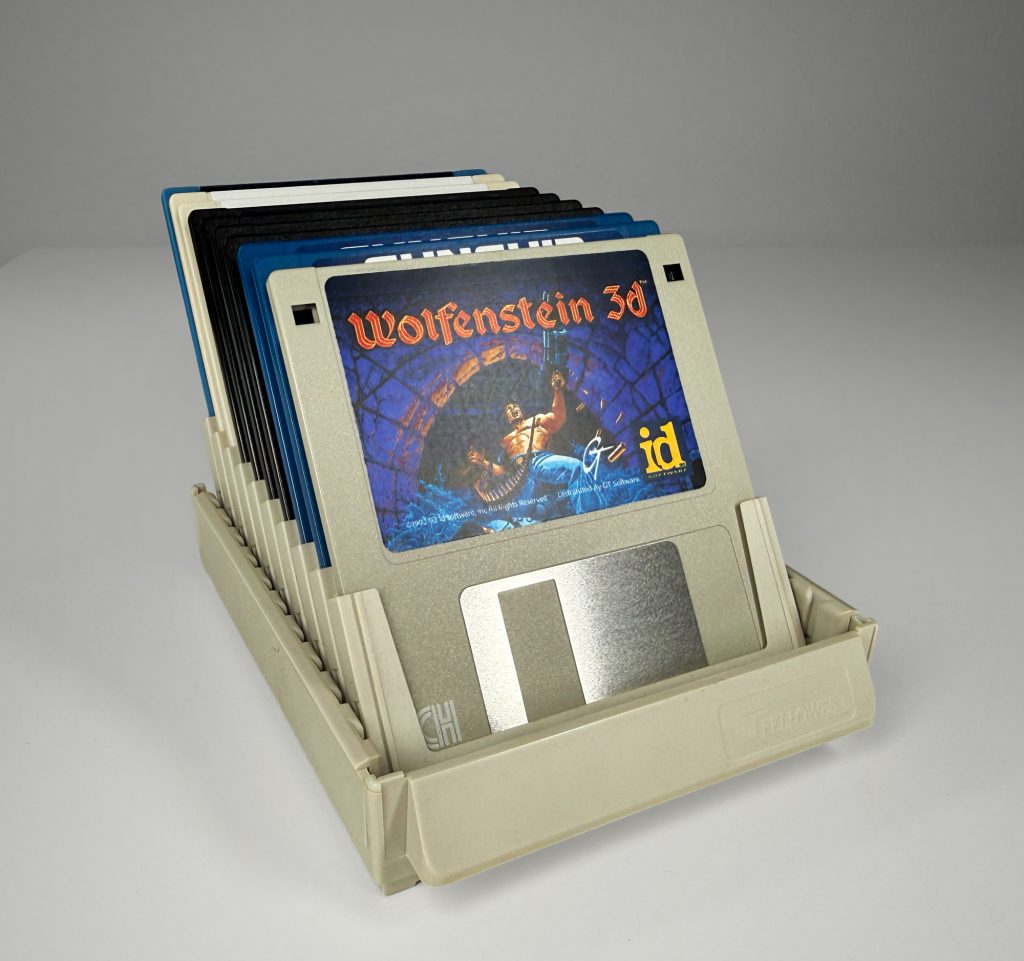
A few months ago I picked up this floppy display piece at VCFSW. It’s obviously the guts of some 3.5″ floppy organizer, but I saw it and thought, man, this would look really cool sitting on a shelf with some disks in it. So I started looking into what it would take to print my own labels.
I started studying DOS game floppies and realized how incredibly plain most OEM disks actually looked. There’s some beauty in the vintage appearance of certain releases, but honestly, most games shipped on mass-produced white labels. So instead of reproducing them, I decided to “remaster” the labels. Keep the era, bring some modern looks.
If you ask me which DOS game from the 3.5″ floppy era I’d jump into and play today? Hands down, Warcraft. So that’s where I started.
For the labels themselves, Avery 94236 in glossy finish turned out to be the winner. Perfect size for the face plate, and the right corner radius.
One catch nobody tells you about: you need generic disks. Consumer floppies from a “box of floppies” almost always have 3M or TDK branding right on the metal door, and that ruins the retail look. Commercial software shipped on unbranded bulk media, so finding clean generic disks is half the battle.
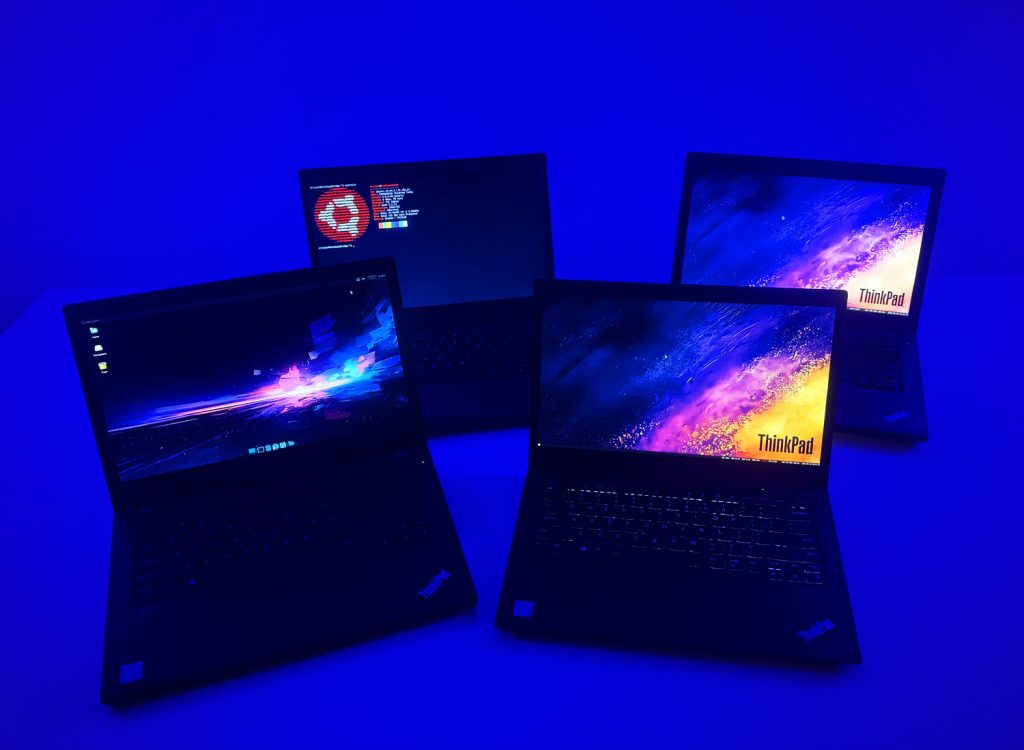
I own four old ThinkPads now. I blame the algorithm. It really doesn’t take much, watch one nerdy video and suddenly your whole feed is people doing cool things with old laptops, and a few weeks later you’re scrolling eBay looking for one, or four.
So let me be clear, I’m not pretending I was listening to the band before they were popular. I actually kind of went right into the greatest hits album, and bought these during peak ThinkPad.
There were a couple of forces at play. Windows 10 end of life forced a bunch of businesses to offload their ThinkPads to e-recyclers, making them super affordable and decently capable machines, if your goal was running Linux. And let’s be honest, it’s been another year of Linux again, and I’ve got a little prediction for you, next year it’s going to be the year of Linux again.
This isn’t a tech review, but no one can talk about ThinkPads without mentioning the amazing keyboards. Yes, they are amazing to type on. And specifically this generation I dove into are all solidly built machines, durable, reliable, and ridiculously upgradable, everything from higher resolution screens to keyboard upgrades, things you typically won’t find in a $200 laptop.
I did time it right. I was able to hit up shopgoodwill.com and Facebook Marketplace to grab 4 ThinkPads, max out their RAM, and drop some super cheap SSDs in them right before hardware prices skyrocketed. It’s interesting, just on RAM and drives alone, these things are now positive ROI appreciation assets (that doesn’t happen in the hobby a lot).
Now why did I see so much ThinkPad content? And why did I join in the fun?
I think there’s also a huge shift in how nerds hobby these days. The days of basement dwelling have shifted, geeks and makers are all content creators now. Everyone’s documenting projects, filming upgrades, taking photos, creating YouTube channels, sharing their hobbies with the world.
Me? I absolutely “did it for the gram.”
I knew after watching enough ThinkPad videos and watching people “rice” their desktops, I wanted in the club. I knew I was going to be writing this blog post before the first ThinkPad hit my doorstep.
These hobbies we love, that used to be pretty isolating, now give us the ability to share and seek out like-minded hobbyists. For instance, I’m an avid homelabber, but it’s not a hobby you can invite people over on a Friday night to come over and “homelab” with you. Unless you guys are doing that, in that case, invite me over!
And you’ve most likely realized by now, this isn’t a post about ThinkPads.
This is a post about wanting to be a part of a community, force myself to write more, break out the camera and play around with some photos. It pushes me to learn Linux desktop customization. There’s this entire flywheel effect by wanting to create content, no matter what kind of content it is.
So today when I’m scrolling through eBay, Facebook Marketplace, and shopgoodwill.com, I’m no longer just thinking “oh, I’d like to mess with that retro computer.” I’m thinking about how I can create a story with it. I know I’ll be challenging myself to make even better content.
This shifts the hobby, but I think what it really does is give the hobby purpose. I’m not just buying and hoarding old gear, I’m sharing stories and hobbies with the world… (even though most of the time it feels like I’m buying and hoarding old gear).
This is my corner of the web. Part lab, part journal, part digital time capsule.
I mess with homelab gear, retro tech, floppy disks, and whatever else hijacks my curiosity. I like figuring stuff out and building things that make me feel something, even if no one else gets it.