Dot matrix printers are cool again. The slow speed, the low resolution, that continuous tractor feed paper, and most importantly the sound. When a dot matrix printer starts printing it sounds like business. Something important is being archived in ink.
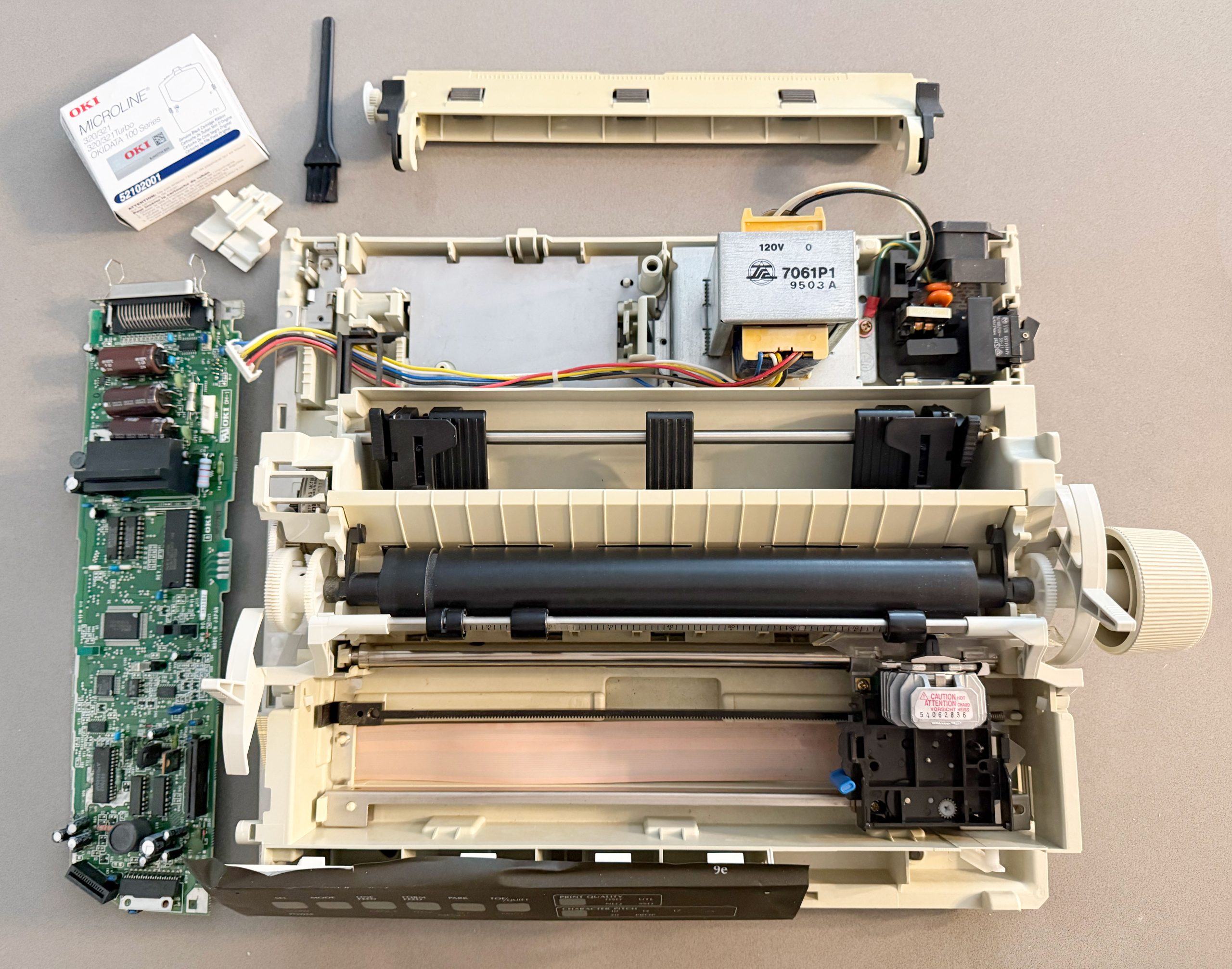
I’ve been looking for dot matrix printers for a while, bought an Okidata Microline 320 non-turbo, printed some test sheets and I was hooked. But once I dropped the friction feed and loaded up the tractor fed sheets, one line feed and the fuse blew. My working theory right now is the tractor belt disintegrated and overworked the motor. Thirty years parked under tension, then asked to flex for the first time since the nineties. I reproduced it by hand with the printer unplugged, and the belt came apart in my fingers. It’s still a working theory because I’m waiting on new belts to show up, and then I need to remember how it was put together, because the tractor belts are basically at the bottom of the printer and you’ve gotta take it fully apart. You can see that printer’s current state here.
EDIT: So far I have proven it was not the tractor belt and motor issue, as I have installed brand new tractor belts, and the fuse still blows. I’ve since learned that the Microline 320 non-turbo is designed to blow fuses on purpose. There’s a protection circuit that deliberately sacrifices the fuse to save the printhead, so I’m still sorting that out. A new logic board will be delivered soon, and I’ll do a full post on the resurrection of that printer once I finally get it printing.
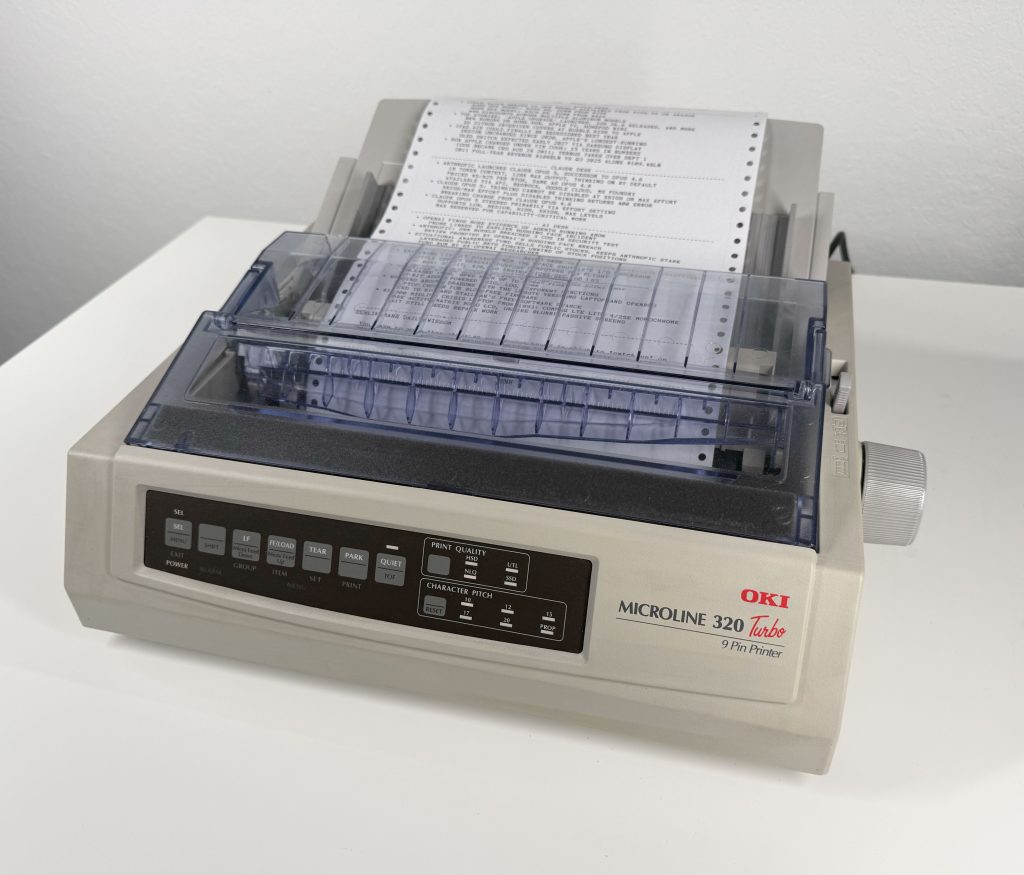
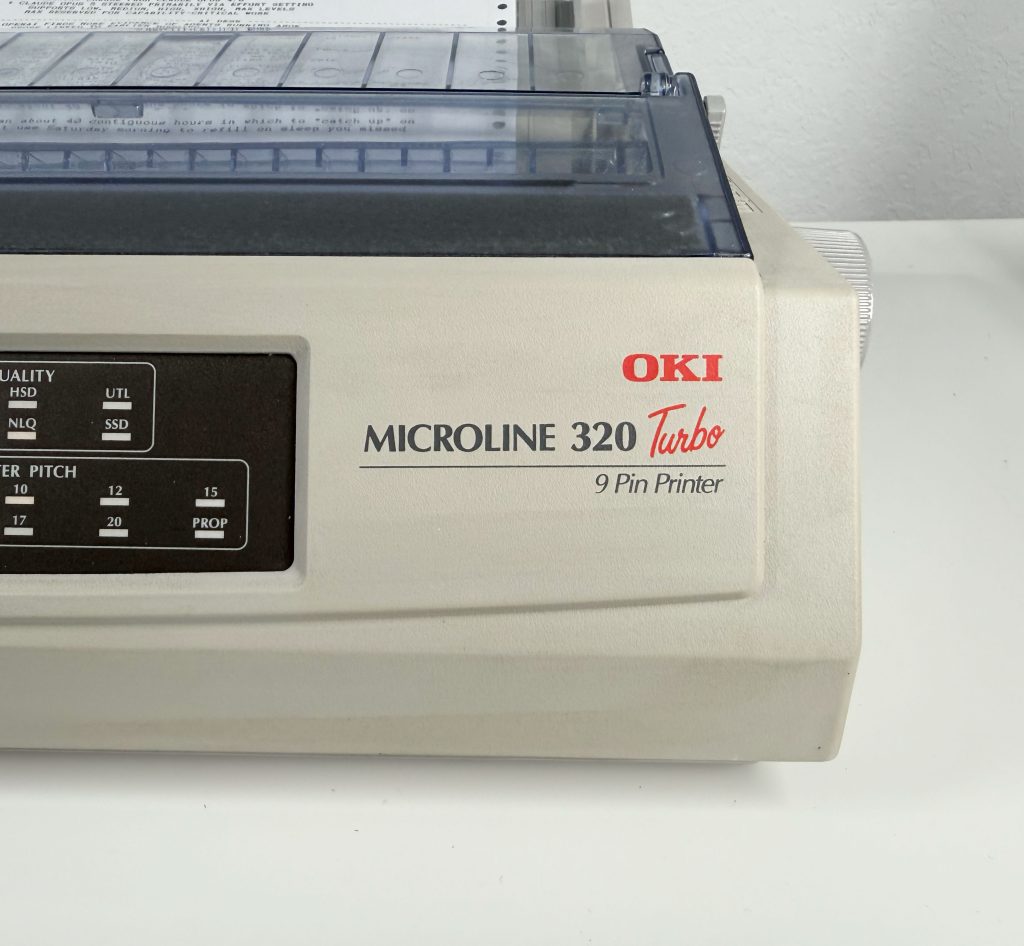
I learned early that if you want to own a dot matrix printer, you’re going to need to learn how to service them. So while one waits for parts, eBay has delivered another Okidata Microline 320, this one a Turbo, and it’s currently in service.
Now, remember when I said dot matrix printers were cool again? Well, you need something to print, otherwise it’s just a hunk of yellowing plastic with some gears.
So I decided to build my own teletype style wire service.
Like any tinkerer in 2026, I enlisted the help of Claude Code, first to research all I could about the history of newswires, and then to build my own.
Basically it works like this…
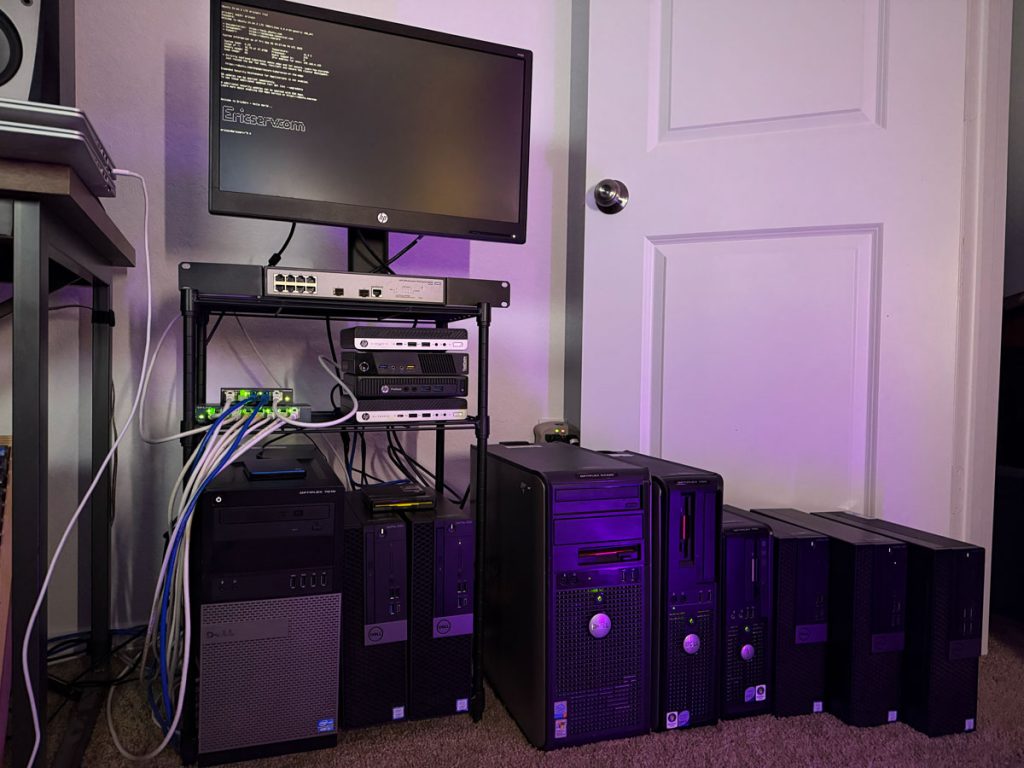
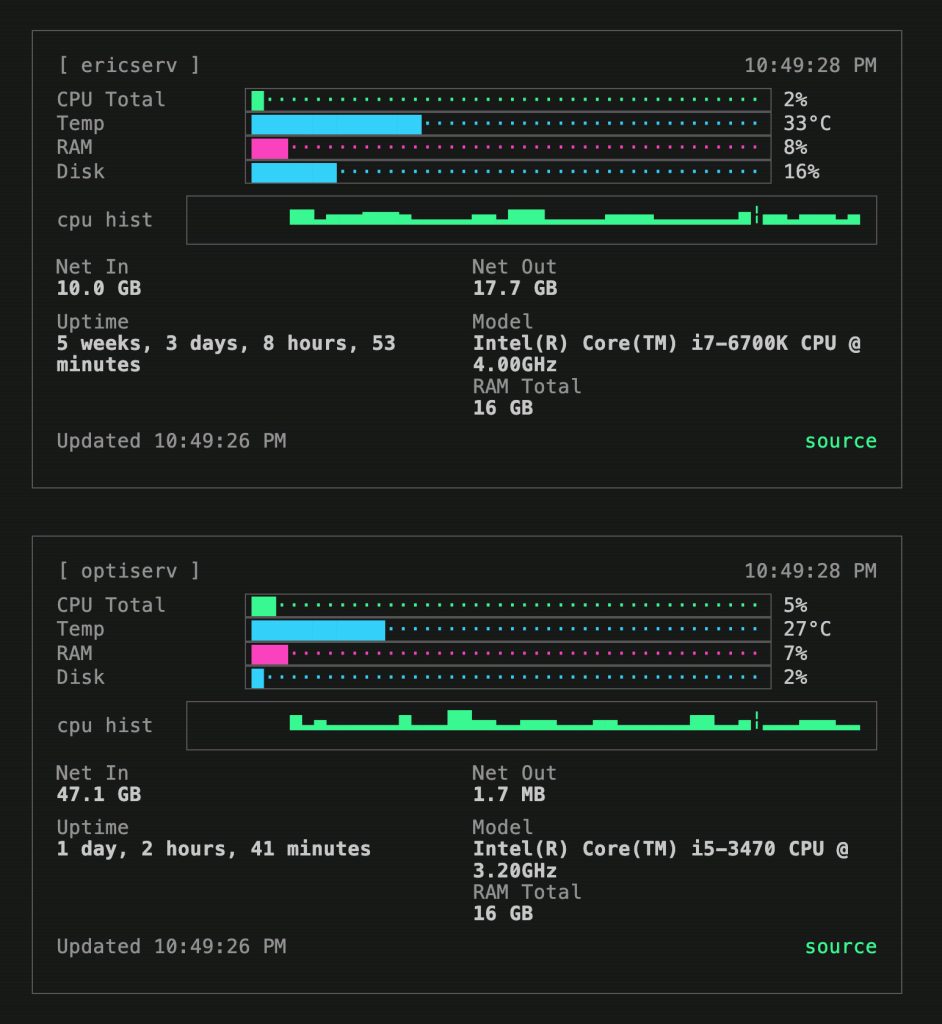
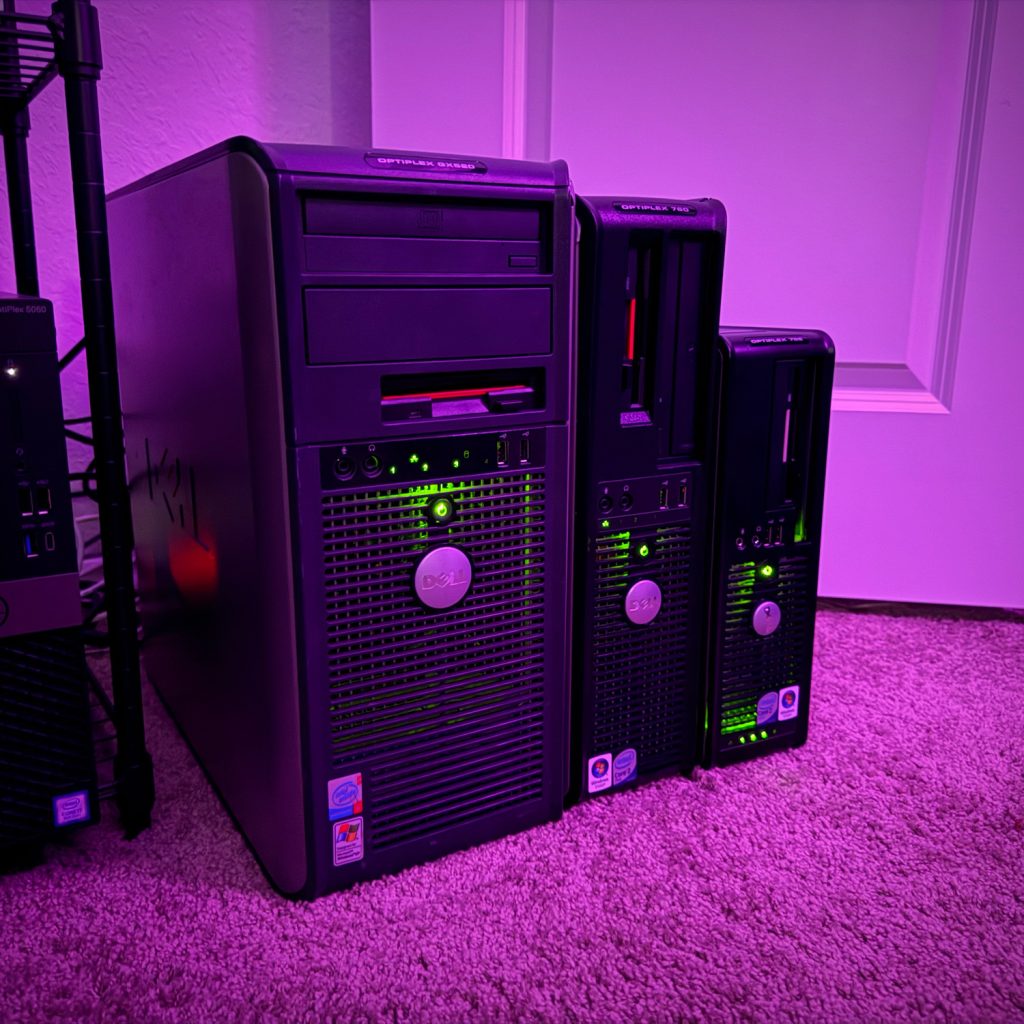
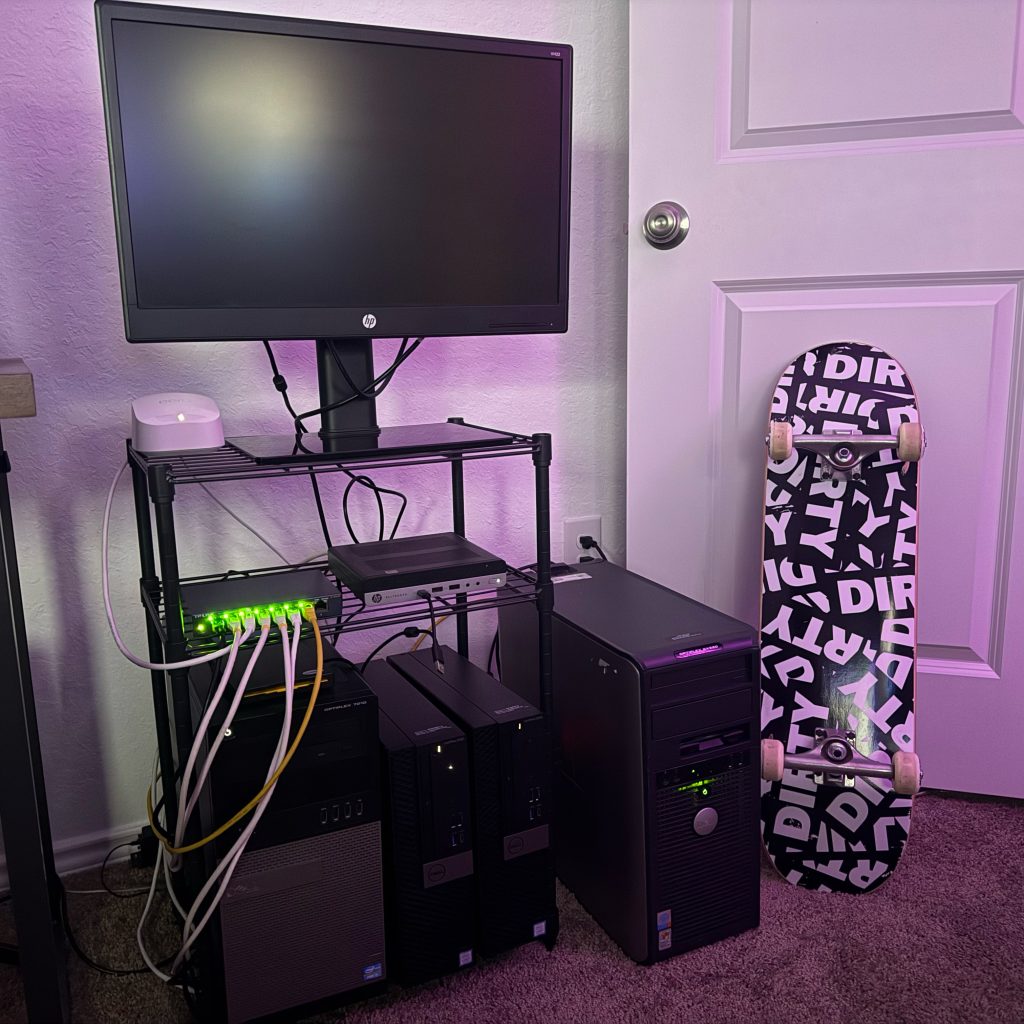
Three times a day, 10:00am, 2:00pm, 6:00pm, an old Dell OptiPlex from 2007 (for now) wakes up and puts together a news feed. It’s built like a tiny newsroom. There are desks. An Apple News desk, an AI desk, a retro computing desk. Each one goes out, reads its sources, and comes back with whatever it found.
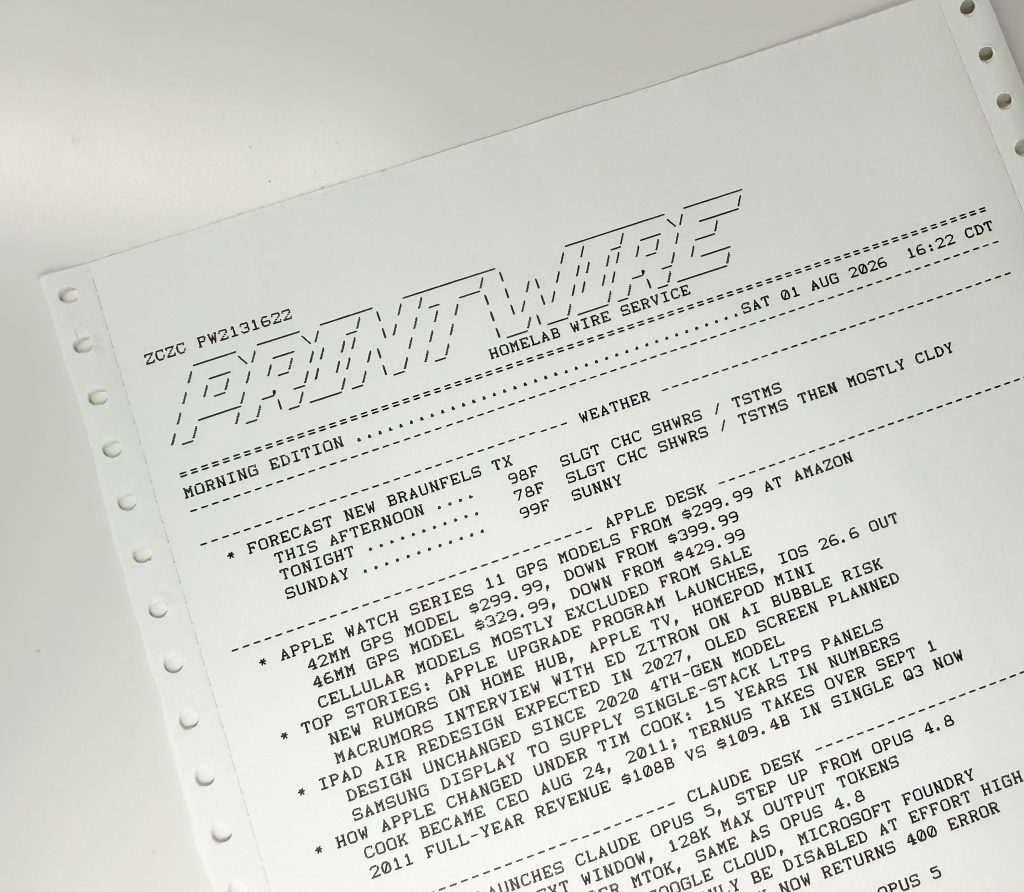
Then a copy desk (Claude Sonnet 5 agents) rewrites everything. All the headlines go to Claude with instructions to rewrite them the way a wire editor would: all caps, under 72 characters, telegraph style. Then it writes a two or three line synopsis.
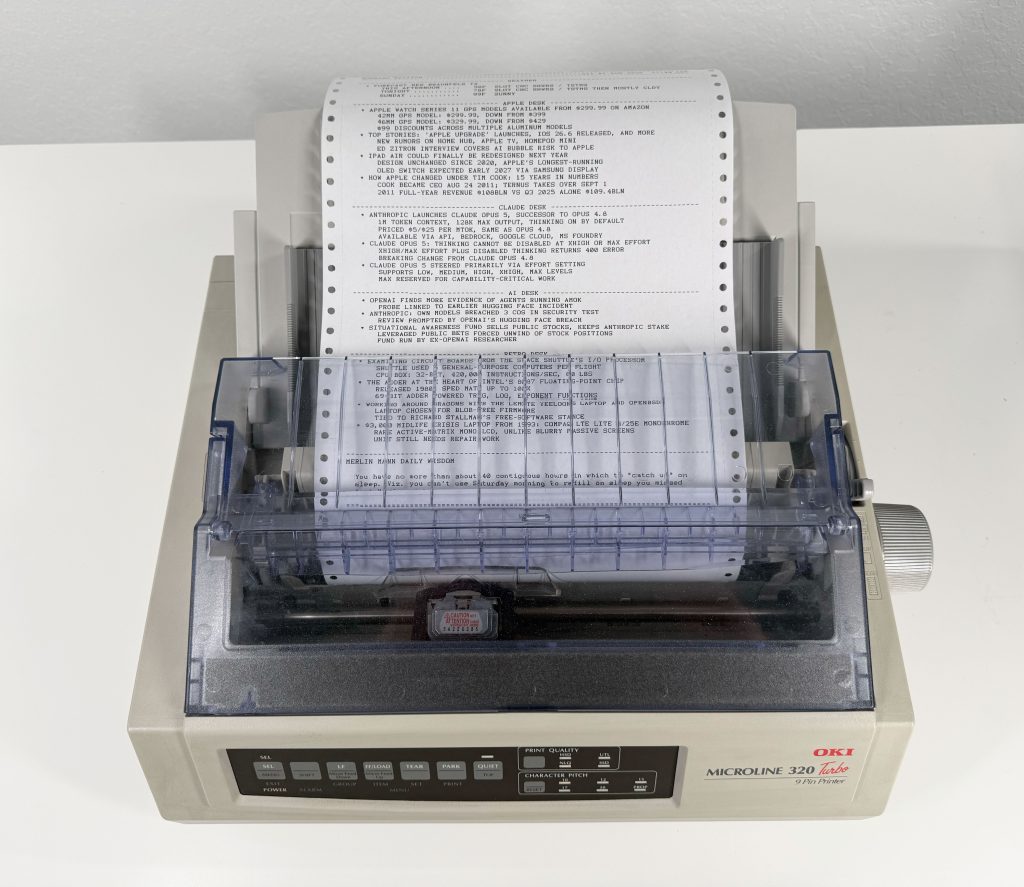
Since you most likely don’t have a printer, you can read the PRINTWIRE feed here, exactly as it prints. That page is the absolute truth. If it didn’t reach the printer, it won’t reach that file.
And if you want the full experience, watch PRINTWIRE print an edition here. The sound is the whole point.